Complete the projected and/or actual forecasting of a menu

Note: each action performed in the application is subject to access permissions. If you cannot carry out the recommended actions in the articles you are viewing, this may mean that the necessary rights have not been activated for your user profile. Contact the Support team, or your administrator, to find out more.

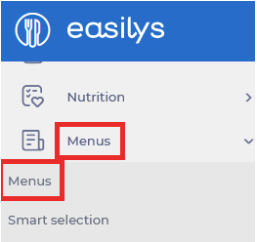
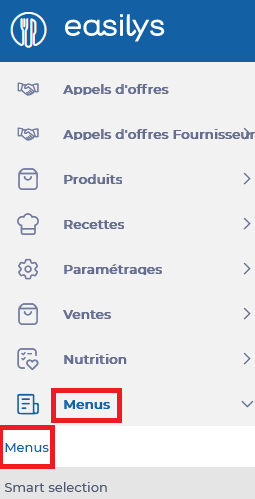
Start from: The Easilys menu.

SET DEFAULT FORECASTED HEADCOUNTS ON A MENU TEMPLATE

It is possible to indicate forecasted headcounts when creating a menu template. This way, the application always pre-fills these forecasted headcounts by default.
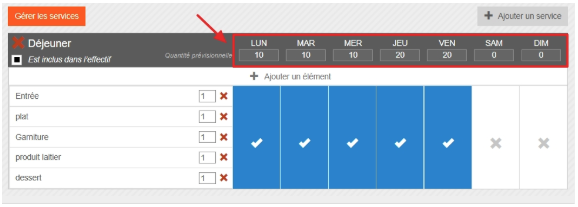
For more information on creating a menu template, see the article Create a menu template from the menu templates screen.

MANUALLY INDICATE FORECASTED AND/OR ACTUAL HEADCOUNTS

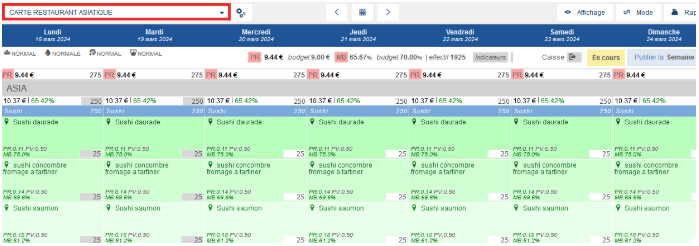
It is possible to modify forecasted and actual headcounts manually directly from the menus by selecting the headcount box at the bottom right of each recipe added in the menu.

Note: the actual headcount is automatically filled in by Easilys whenever a forecasted headcount exists and the date has passed. To ensure this actual headcount is correct, you can modify it.

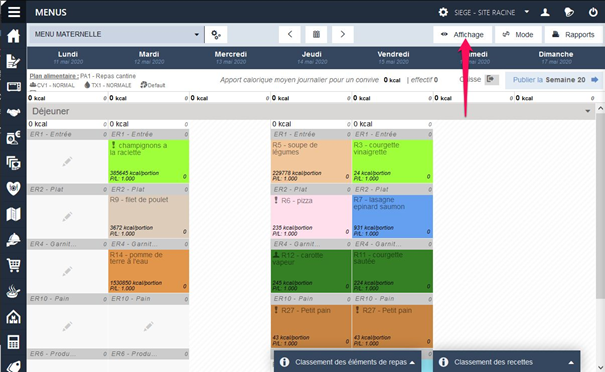
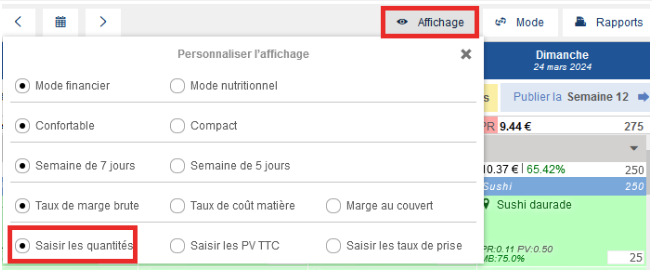
Note: there are several menu display types. You may not be in the view that allows you to enter headcounts. In that case, select Display and choose the option Enter quantities.
Note: you can make several changes before selecting Save now. Just make sure you do so before leaving the menus page, or you will lose your modifications.

COMPLETE FORECASTED AND/OR ACTUAL HEADCOUNTS USING THE MENU QUATITIES SCREEN

Note: for a past date, the total is greyed out and the R box is highlighted. This is where you must enter the actual headcounts.

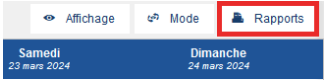
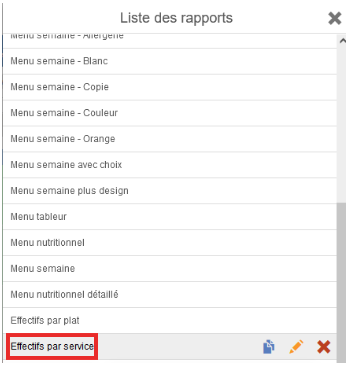
You can also download the Count per meal type report from the Menus screen. This will give you a spreadsheet showing weekly headcounts per dish and service.

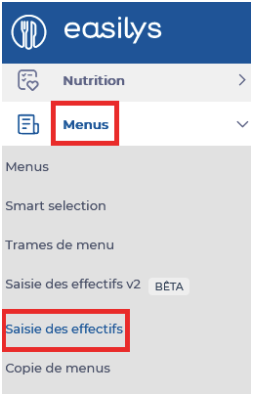
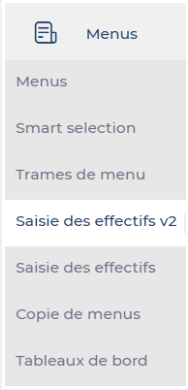
COMPLETE FORECASTED AND/OR ACTUAL HEADCOUNTS USING THE MENU QUANTITIES V2 SCREEN

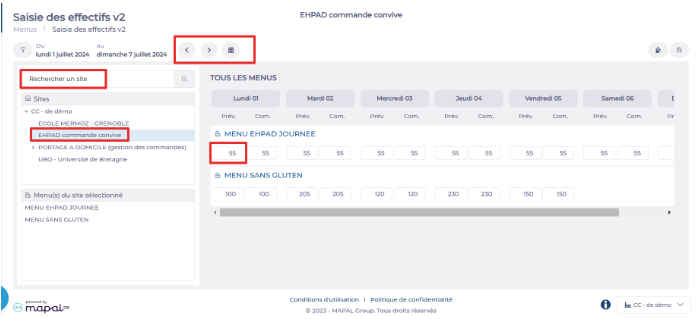
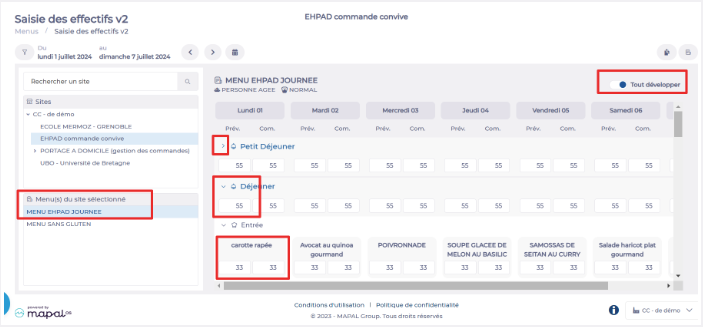
This entry screen is particularly useful if you need to enter headcounts for several child sites. For example, if you manage a central kitchen, it allows you to enter and view headcounts for your delivery points:

You will then see an entry line for each menu template of this site. The headcounts you enter here will be applied identically to all services of the day.
If you want to enter different headcounts depending on the services:

Note: You can hide or display the recipe details either service by service (arrow next to the service) or globally (the Expand all option).
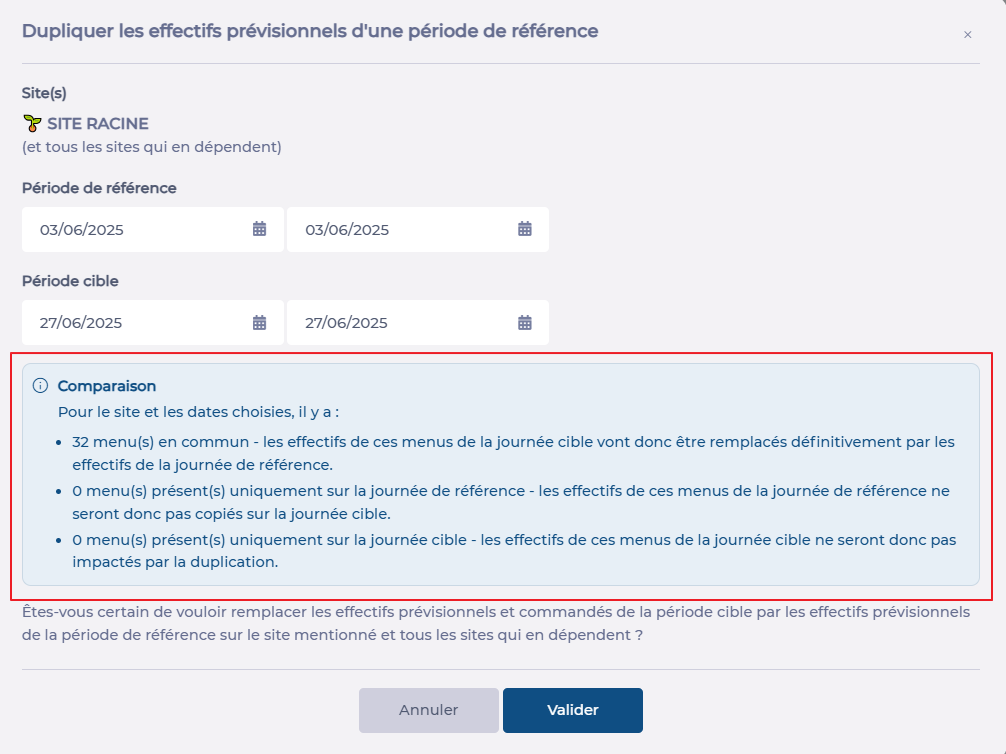
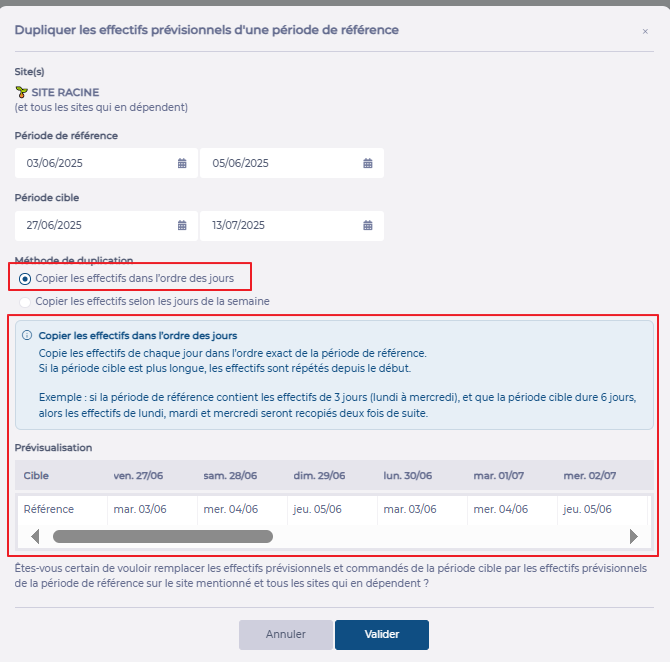
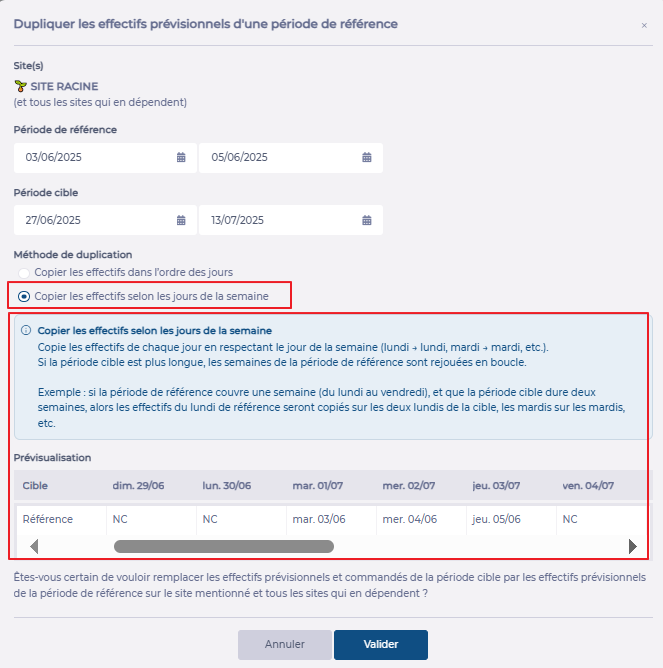
If you want to fill in the forecasted headcounts of a future period with the headcounts from another period (past or future), you can also use the Duplication function:

Note: Depending on the selected period, the available options and the information message will update. Take the time to carefully read this message as well as the summary table that appears when copying a period of more than one day to fully understand the impact of your action.

Add progression to a recipe

If your environment is configured for multiple languages, the multilingual icon appears for some fields. For more information on how to use it, see the article Use Easilys in multilingual mode .

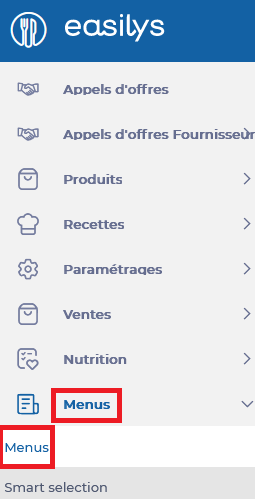
Start from: The Easilys menu.

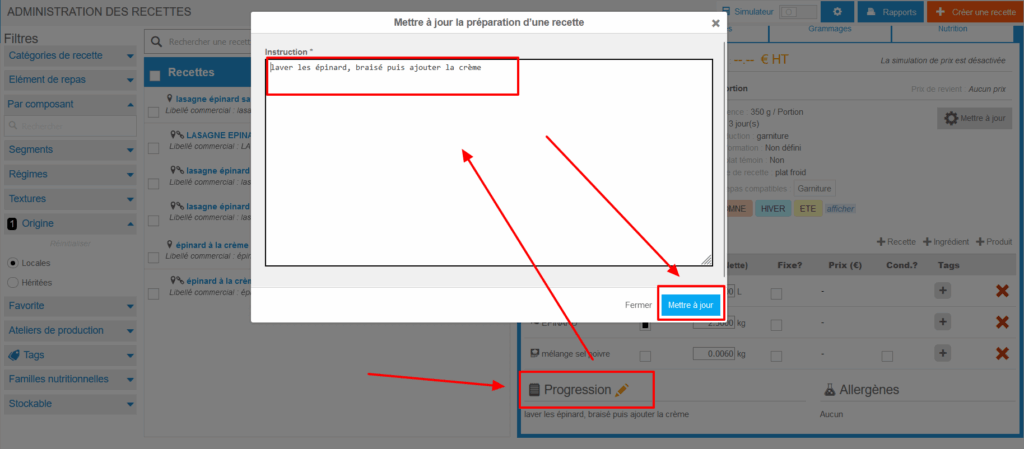
In the Progression section:

A pop-up window Update recipe preparation appears:

Add a non-compliant meal to a meal plan

Start from: The Easilys menu.

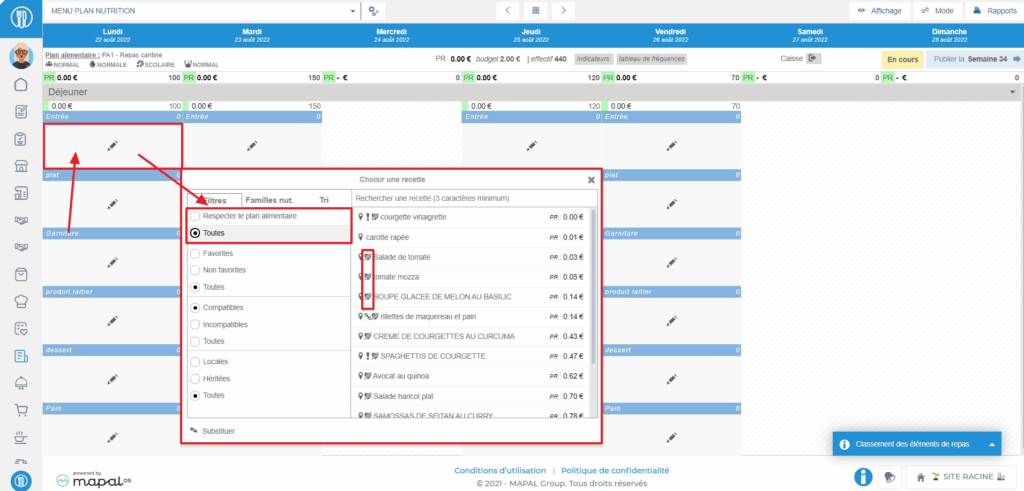
If the Ability to add dishes that do not comply with the meal plan permission is enabled on the user's profile, then they have access to the "Comply with meal plan" or "All" filter in the recipe selection window to be placed in the menu.
When the filter is set to "All" and not "Comply with meal plan", recipes that do not comply with the meal plan have a crossed-out heart icon (the symbol of the MEAL PLAN screen crossed out).

Note: If you do not have the necessary permission, contact your administrator or our Support team to check if it is possible to enable the permission on your profile.

Administer the list of meal items and services

If your environment is configured for multiple languages, the multilingual icon appears for some fields. For more information on how to use it, see the article Use Easilys in multilingual mode .

Start from: The Easilys menu.

Administration of the list of meal items and services is done via the "Manage services" function, which is accessible from Menus > Menus as well as from Nutrition > Meal plan.

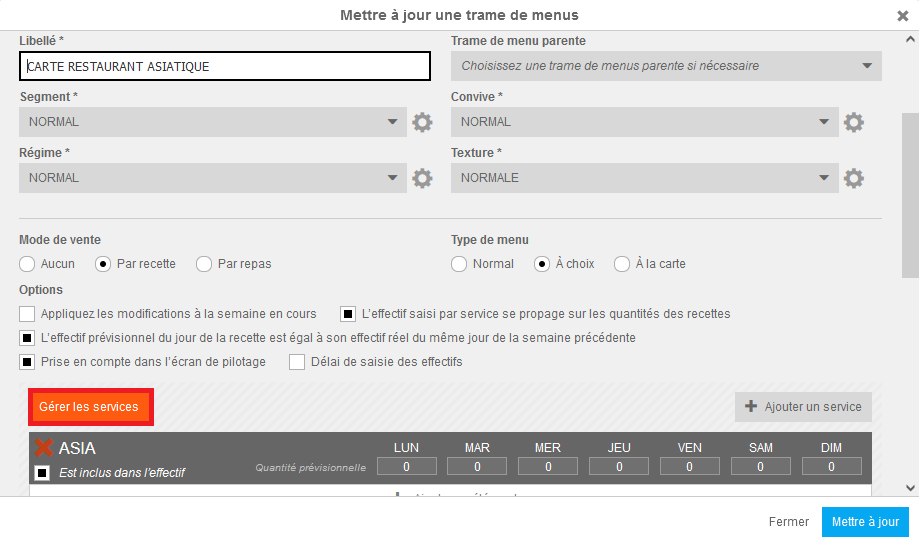
Access the "Manage services" function, 1st method: from Menus > Menus.

Note: if you do not have any menu frames on your root site, Easilys will then prompt you to create one. Accept this creation to access the administration of services and meal items. (You will not be required to finalize the creation of the menu frame if you do not wish to.)

The Update a menu frame window appears on the screen.

Note: this button is only visible if you are on the root site and have administration rights for these items.

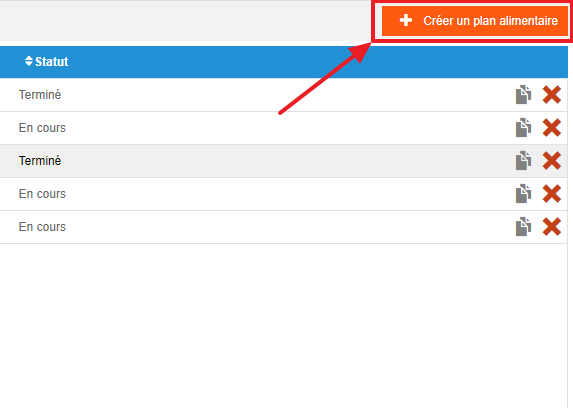
Access the "Manage services" function, 2nd method: from Nutrition > Meal plan.

Use the "Manage services" function

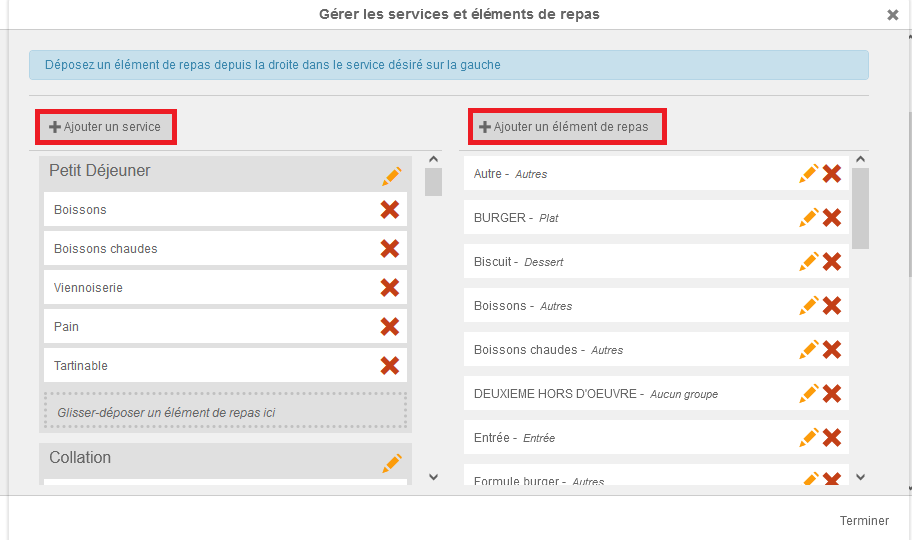
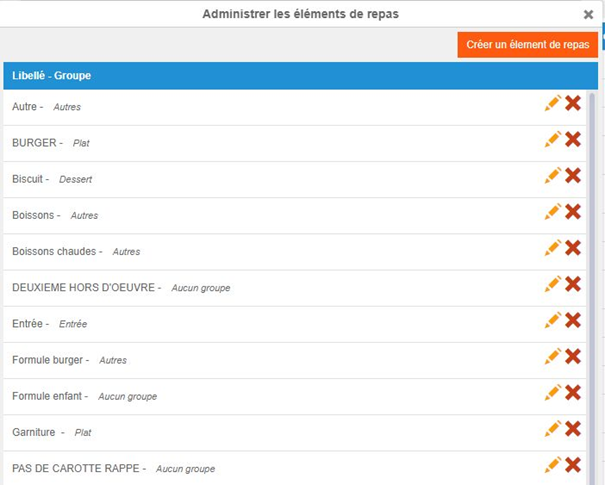
The Manage services and meal items window appears on the screen. Service management is on the left side of the window, meal item management is on the right side.

Note: it is not possible to delete a service, you can only rename it.

Note: be careful not to delete a meal item by mistake when you only want to remove it from a service composition!

Note: if it was part of a service composition, you will need to update the menu frames to remove it. Deleting a meal item does not remove its use in the menu frames.

Customise menu names in Engagement

Start from: The Engagement dashboard.

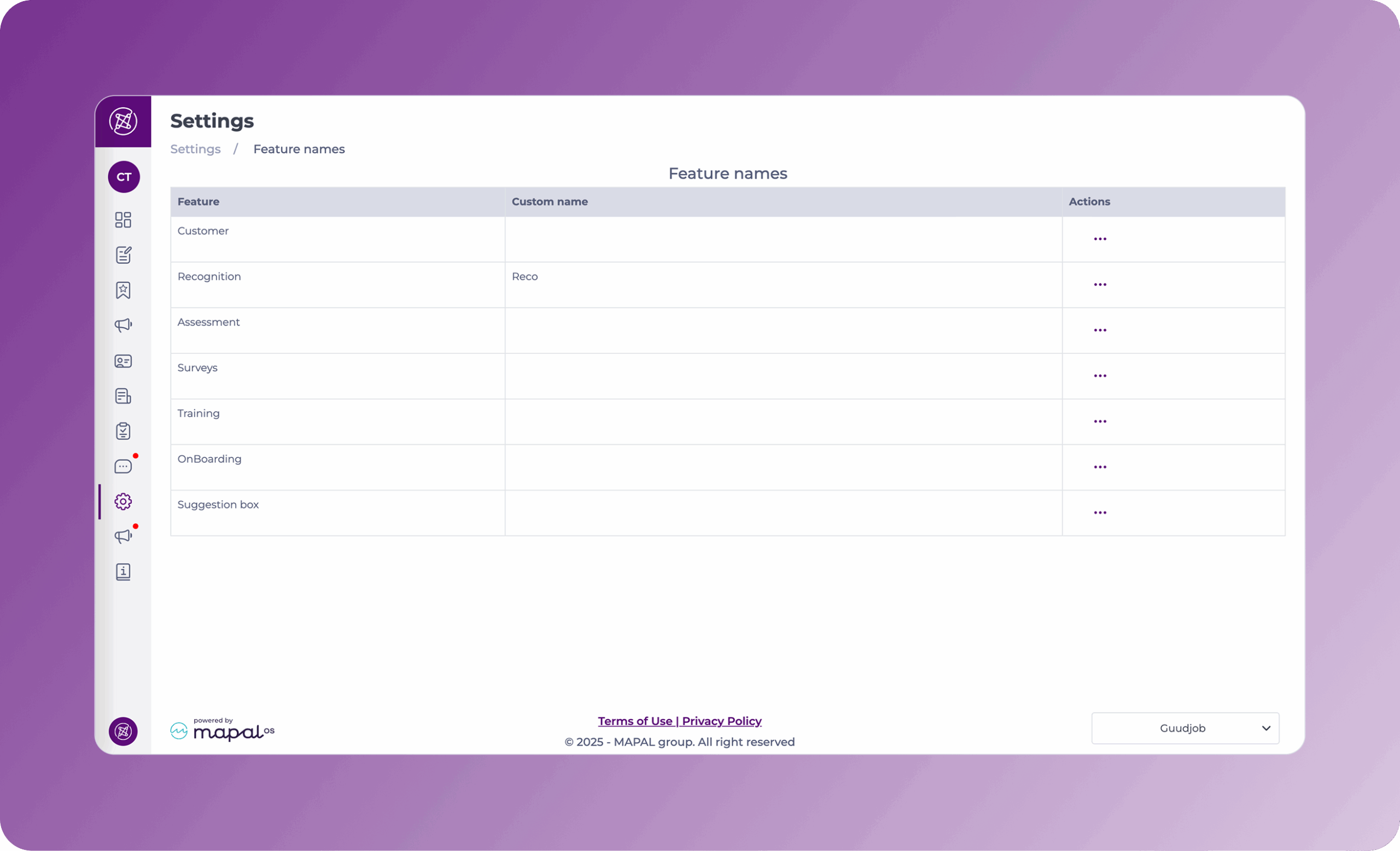
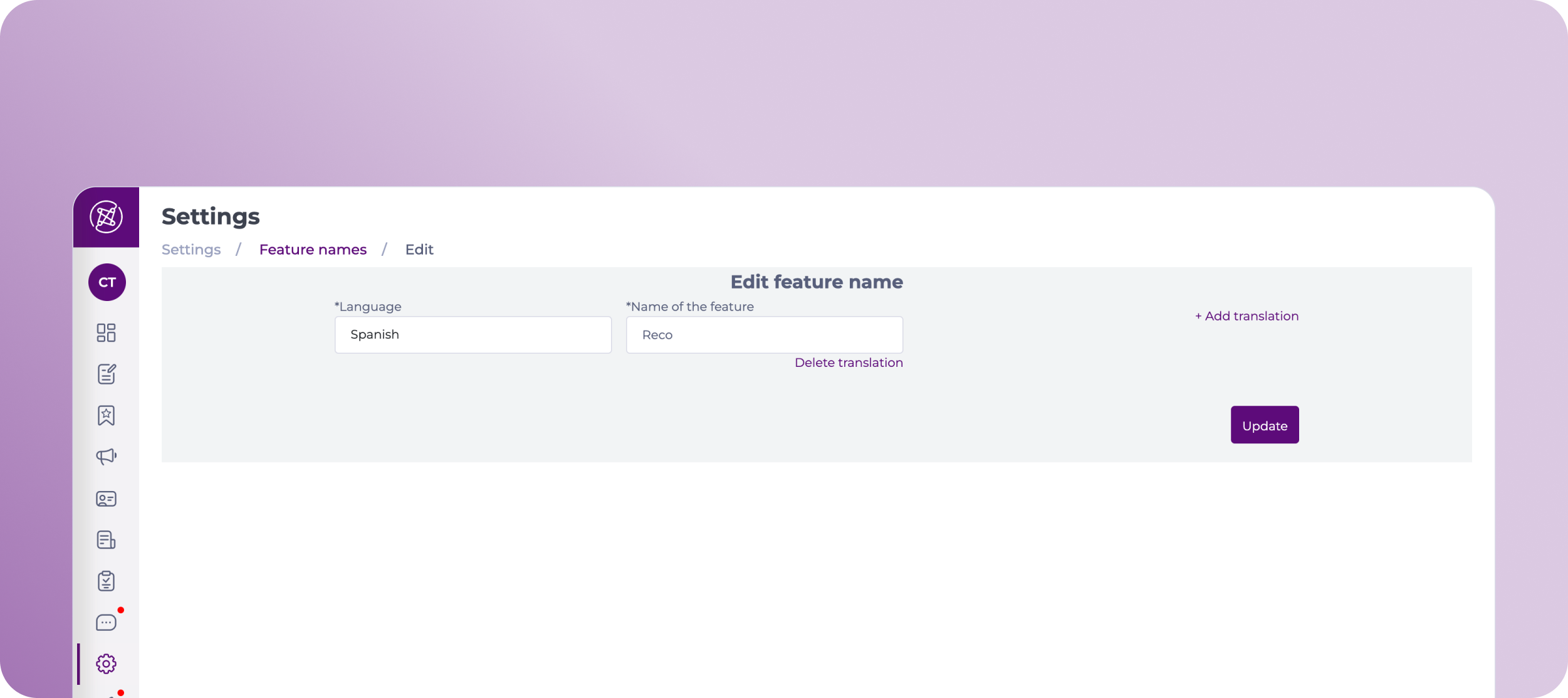
  • Navigate to Settings > Feature names.
  • The Feature names grid shows you three columns:
    • The names of all the functionalities available.
    • Custom names assigned by you.
    • Actions. Note that the only action available is Edit.

  • Select the Action button (three dots) at the far right of the feature’s row and press Edit.
  • In the Edit feature name screen, you can modify:
    • Main language
    • Feature name
    • Add translations of the feature name

Notes: You can add as many names as languages, 5 (Spanish, English, French, Italian, and Flemish).

  • Once you complete the edition, select Update to save the changes.

The new custom feature name will now appear in the second column of the grid.

Manage jurisdictions in Flow Learning

rong>Overview:: Jurisdictions in Flow Learning enable you to group learners in your company according to their area or region's specific legislations and assign them specific resources.
Start from: the Flow Learning dashboard.
To access Jurisdictions:

Delete items in Flow Learning by batch

  • Select Delete.
  • Confirm your deletion by selecting Save.
Note: this is irreversible and items will be deleted permanently.
 

Record information with Menu quantities

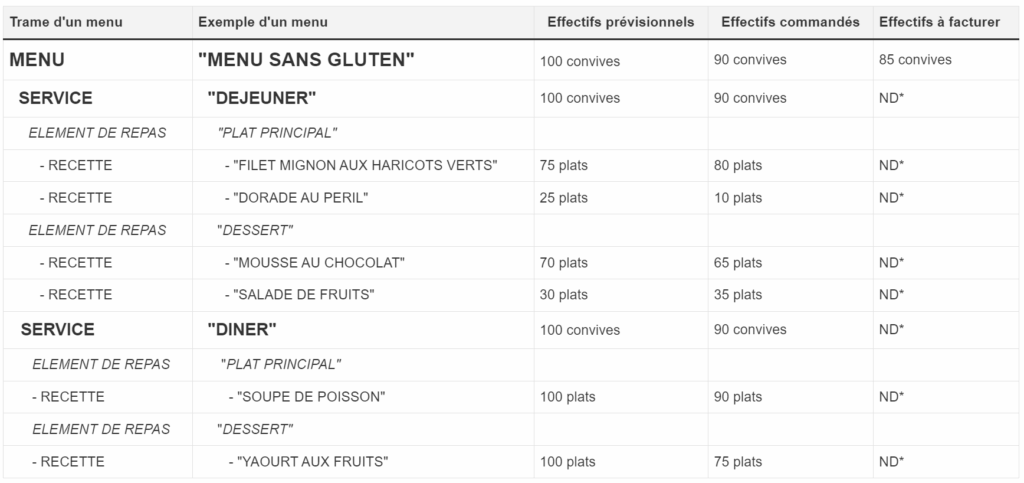
Menu quantities entry allows you to record, on a daily basis, the number of guests for each menu with details at the service level (breakfast, lunch, dinner, etc.), meal components (starters, main course, dessert, etc.), and recipes.

Based on the quantities, it is possible to anticipate production and later observe the difference between forecasted and ordered quantities.

General information

For a given day:

Example of a day:

*ND: Not available in the current version of the application.

Note: A menu is generated from a menu template.

For each menu, you can track daily:

General rules for forecasted quantities:

General rules for ordered quantities:

Note: This return to the previous amount is only possible during the current session (if the user closes the application and returns to the screen, the return is no longer possible).

General rules for quantities to be invoiced:

Note: This return to the previous amount is only possible during the current session (if the user closes the application and returns to the screen, the return is no longer possible).

General parameters impacting the menu quantities entry screen

At the site settings level:

Functional scope

Site search function

The site search allows you to search for any site in the entire site tree authorized for the connected user.

Note: If the Do not display this site in the site tree parameter is enabled for certain sites, then these sites do not appear in the tree.

Select a site and/or a menu

Selecting a site displays the possible list of its associated menus with the quantities for the selected period.

Note: If the Do not display menus on this site parameter is enabled for certain sites, then the possible menus for these sites do not appear.

Selecting a specific menu displays the quantities for the service(s) associated with this menu, with details by meal component and by recipe.

Initialization/Modification of quantities at the menu level

Forecasted/ordered quantities at the menu level are initialized/calculated automatically:

If the menu consists of different services with the same quantity, it is possible to modify the menu quantity, which automatically updates the service quantities (e.g.: Service 1 = 200, Service 2 = 200, changing the menu quantity to 300 updates each service to 300).

If the menu consists of different services with different quantities, then the menu has a NC (Not calculable and not modifiable) quantity.

Quantities to be invoiced are automatically initialized with the ordered quantities. The user can freely modify the quantities to be invoiced.

Initialization/Modification of quantities at the service level

Forecasted quantities for services are automatically initialized:

If the services have the same value, it is possible to modify the menu quantity, which automatically updates the service quantities (e.g.: Service 1 = 200, Service 2 = 200, changing the menu quantity to 300 updates each service to 300).

Quantities to be invoiced are not currently managed at the service level.

Initialization/Modification of quantities at the meal component level

No quantity is displayed/calculated for a meal component.

Initialization/Modification of quantities at the recipe level

Forecasted quantities for a recipe are automatically initialized:

Modifying the forecasted quantity for a service:

Quantities to be invoiced are not currently managed at the recipe level.

Duplicate a reference day

To facilitate entry, it is possible to duplicate (copy/paste) a reference day to a target day.

The general principle of duplication is as follows:

Before applying duplication, a summary of its impact is provided to facilitate understanding and control. It indicates between the two dates:

Business rules:

Details on duplicating quantities at the recipe level:

The probability of having the same recipes between the reference day and the target day is very low. The distribution of quantities for the recipes of the target day is therefore based on the ratio of the quantity for the recipes of the reference day, maintaining the order of the dishes set in the template.

Three scenarios:

In all cases, the quantities for the target day are identical to those of the reference day.

Quantities to be invoiced at the recipe level are not currently managed in the application.

Filters

This filter allows you to customize the display by limiting it to certain types of quantities to facilitate entry and consultation.

Reports

This report lists the sites for which the entry of ordered quantities has been completed or not, taking into account the management of tours. Display options allow the report to be adapted to the desired context.

Substitute recipes in your menus

Start from: The Easilys menu.

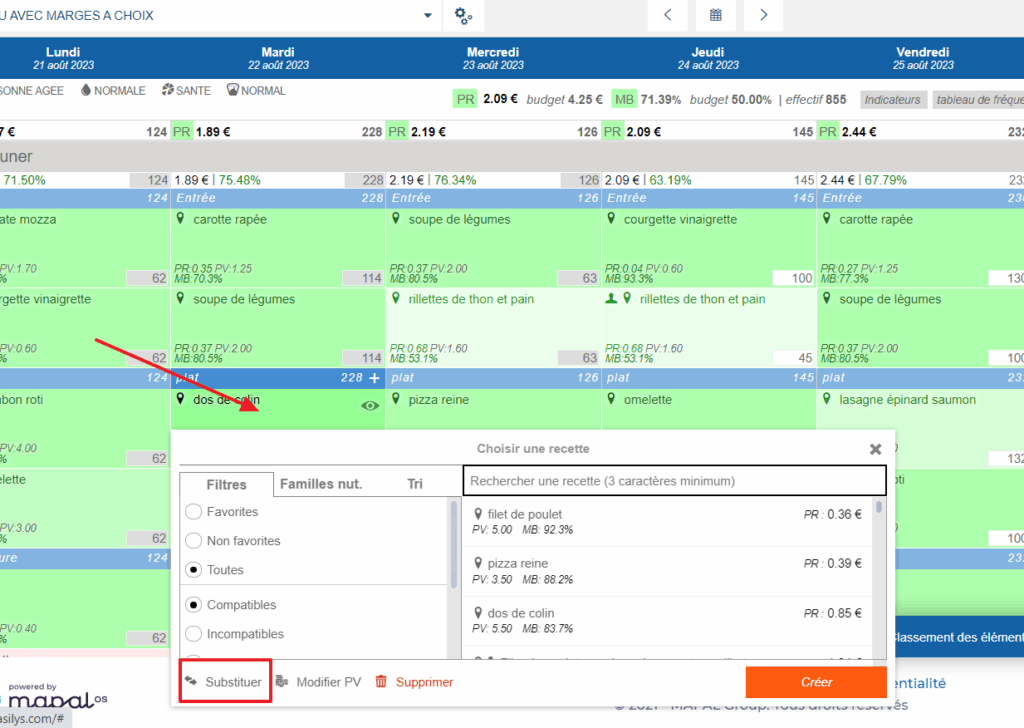
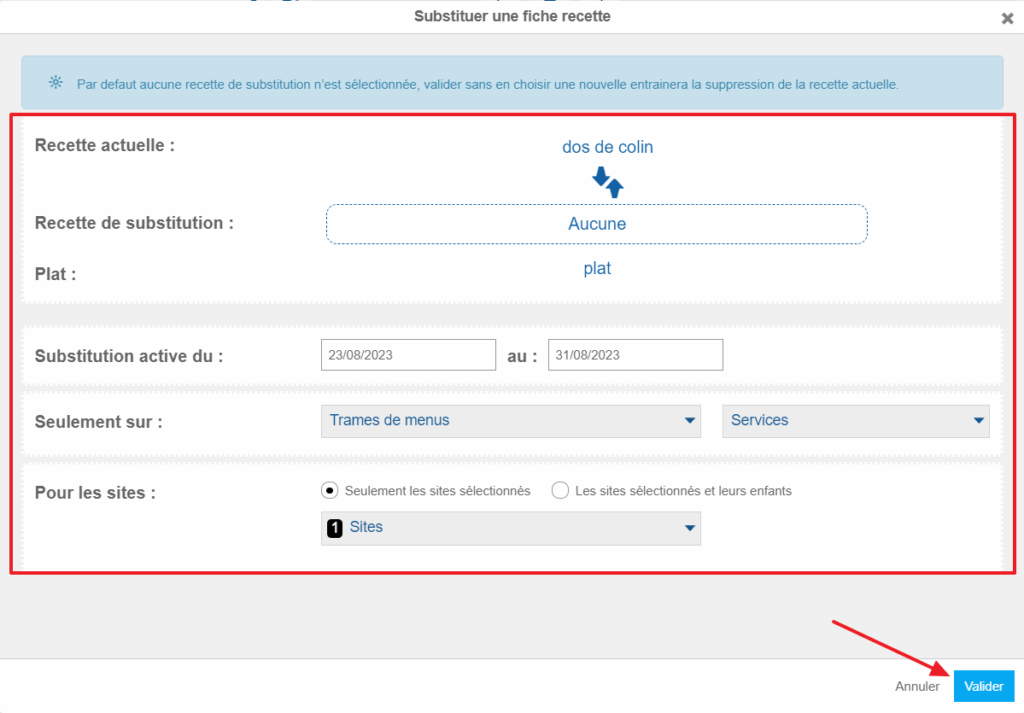
Do you need to replace one recipe with another for a specific period in your menus? Rather than making manual changes over several days, use the recipe substitution system!

You can define the period during which a recipe should be replaced by another and Easilys will make the changes for you. This saves time, especially when you do not know exactly where the recipe appears during the period.

The small recipe selection window will then appear on the screen.

The “Substitute a recipe sheet” window will then appear on the screen.

A green message at the top right of the screen will indicate the number of recipes that have been substituted during the period.

Manage nutritional families

Start from: The Easilys menu.

Nutritional families are used to build meal plans. Once completed, these meal plans can be attached to menu templates during their creation. To develop the menus of these templates, you will be prompted by Easilys to adhere to the meal plans.

Indeed, Easilys will specifically suggest recipes compatible with the nutritional families defined for each meal item in the meal plans. It is therefore important to attach your recipes to nutritional families for it to work.

The table of nutritional families is displayed. This is the table in which you can view all existing and usable nutritional families in meal plans and recipes.

The most important information in the table is that of the Recommended meal items. This indicates the meal items in which this nutritional family can be positioned when creating a meal plan.

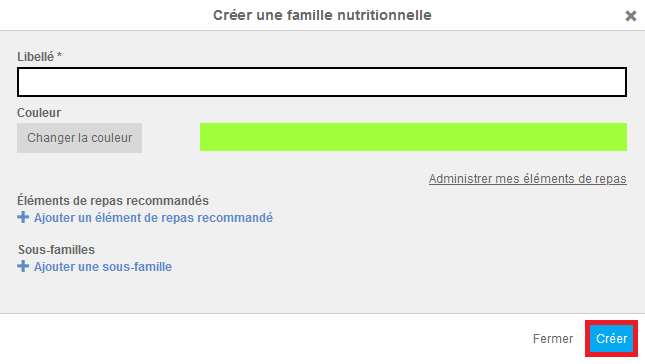
Label: enter the name of the nutritional family here.

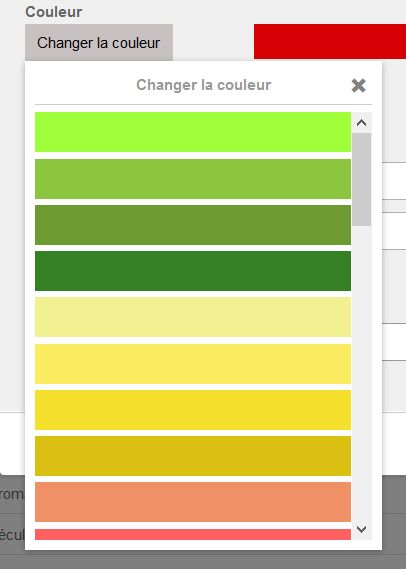
Change color: indicate the color of the nutritional family here. The color facilitates the reading of the meal plan and allows displaying the nutritional families of each meal item in your menus using the nutritional display mode.

Recommended meal items: indicate here the recommended meal items to use the nutritional family. For reminder, meal items compose meal plans and menu templates and are attached to recipes.

Sub-families: indicate here the sub-family(ies) of the nutritional family. This is optional.

Manage my meal items: You can create, modify, or delete meal items through this window. Meal items are used in meal plans, recipes, and menus.

You will then find the new nutritional family in the table.
You can then use this new nutritional family in meal plans and recipes.

Note: to build a meal plan, you may need to adhere to specific nutritional recommendations such as those from GEMRCN. You can then provide the frequency constraints to be respected for a nutritional family from the Nutritional family constraints screen available from the Nutrition tab.